
Microcredentials with Purpose
Why Strategy Must Come First

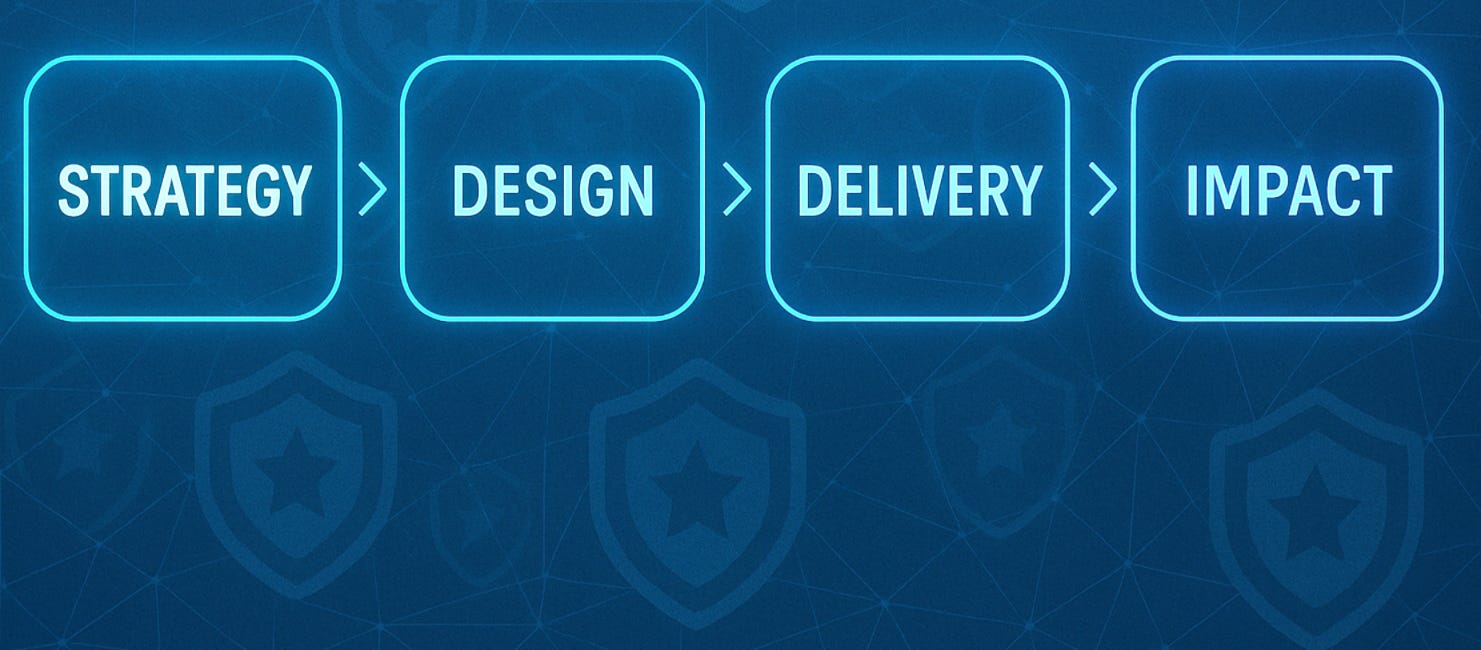
Not all microcredentials deliver impact, but the ones that do begin with a clear purpose, thoughtful design, and strong alignment with real-world needs. Here I am exploring what we can learn from early examples that are focused on the impact.
Big change doesn’t always begin with a big qualification. Sometimes it starts with something much smaller, a course designed with care, a credential linked to a real opportunity, or a learner gaining just enough confidence to take their next step.
What matters most isn’t the size or reach of the credential - it’s the clarity of its purpose.
Over the past few years, we’ve seen a surge in microcredentials across sectors. Some are thoughtful and targeted. Others feel more like solutions in search of a problem or everyone has them, we need some too. But the ones that stand out to me aren’t necessarily the most polished or the most widely adopted. They’re the ones where you can clearly see the thread: a defined need, a targeted learner, and a credential built to connect the two.
Many of these initiatives are still new, and long-term outcomes are still emerging, so the focus here isn’t success, but rather alignment. When strategy shapes design, and design shapes delivery, microcredentials are far more likely to live up to their promise.
When Strategy Leads, Credentials Land
Good microcredentials don’t try to solve everything. They’re precise. They’re contextual. And they’re grounded in a specific goal.
League of Entrepreneurs & KNUST (Ghana)
In Ghana, the League of Entrepreneurs and Kwame Nkrumah University of Science and Technology (KNUST) created a set of short courses in entrepreneurship and digital business. They wanted to equip underemployed youth with practical, job-creating skills. These weren’t just university-branded workshops. They were intentionally built to serve a local economic development goal, with a trusted academic partner adding recognition and credibility.
Early Wins: Strong enrolment and anecdotal evidence of new ventures and community projects.
Why It Matters: This isn’t generic training, it’s part of a larger economic development strategy that positions learners as job creators, not just job seekers.
Read more: The Power of ‘Short Courses’
Killara Academy (Australia)
Killara High School in Sydney launched the 'Killara Academy,' a 20-week co-curricular program aimed at students in Years 7 to 10. The academy offers microcredentials in areas such as artificial intelligence, particle physics, citizen science, global biodiversity, and Java programming. Students also participate in practical workshops covering financial literacy, automotive maintenance, and community service. The program includes partnerships with organizations like Google, Qantas, and Tesla, providing students with exposure to cutting-edge technologies and career pathways.
Early Wins: Over 200 students have participated in the program, gaining real-world skills and experiences that extend beyond traditional academic learning.
Why It Matters: The Killara Academy exemplifies how integrating microcredentials into secondary education can prepare students for both higher education and the workforce by providing them with practical skills and industry exposure.
Read more: Killara Academy awards microcredentials at school
Knox College (Australia)
Knox College has taken a different tack. Their Certificate of Global Competency was built to validate durable skills like intercultural understanding, ethical leadership, and global citizenship. By turning these into microcredentials and integrating them into the broader curriculum, they created an offering that was both forward-thinking and grounded in their school’s global vision.
Early Wins: School-wide integration and student uptake; stronger articulation of “future-ready” skills.
Why It Matters: Strategic framing turned abstract values into assessable, portable learning - connecting vision with evidence.
Read more: Knox launches new Certificate of Global Competency
University of Alicante (Spain)
The University of Alicante in Spain approached strategy from a policy lens. Adults over 25 can complete a series of microcredentials to gain formal access to undergraduate or master’s programs. These aren’t just signals of lifelong learning—they’re structured pathways into recognised qualifications. It’s a system-level solution to participation and access, with the credential as the hinge.
Early Wins: Clear policy support and uptake among non-traditional learners.
Why It Matters: This is recognition in action - microcredentials as a legitimate gateway, not an add-on or alternative.
Read more: UA university Microcredentials
Cairns State High School & CQUniversity (Australia)
And finally, Cairns State High School, in partnership with CQUniversity, aimed to give graduating Year 12 students employability-focused microcredentials. The design was strong. But the execution hit barriers: cost of living pressures, IT access, and time constraints. Still, the intent was there. The strategy was clear. And it serves as an important reminder that while strategy is critical, on its own isn’t enough - delivery infrastructure matters just as much.
Early Wins & Challenges: Some students gained valuable additions to their portfolios, but access issues (tech, cost) limited reach.
Why It Matters: The strategy was sound—but the execution highlighted just how critical infrastructure is. Credentials can’t succeed without access and support.
Read more: Microcredentials – preparing school students for life after graduation
(Big thank you to Cairns State High School for sharing their lessons learned, too often we only hear the good news and not the pain points)
From Product to Purpose
What all these examples share is intention.
They didn’t start by asking “What kind of microcredential should we offer?” They started by asking, “What do our learners need?” and “How can we help them get there?” That shift - from product-first to purpose-first - is subtle, but it makes all the difference. It keeps the learner at the centre. It opens up opportunities for recognition. And it forces us to think about where these credentials go, not just what they are.
That’s where strategy shows up most clearly, not in the final badge, but in the design choices that lead to it.
A Final Thought (and a Quiet Offer)
I’ve worked across education, government, and industry to help organisations design microcredentials that actually do something; open doors, change perceptions, or build better bridges between learning and work.
If you’re thinking about launching or scaling a microcredential initiative, I’d love to help you get the strategy right from the start. The credential is only ever the output. The impact starts with the plan and purpose.
Whilst we talk a lot about learner-centred design, too often, microcredentials are built around content, not people. Next week I’ll be looking at how learner personas, grounded in lived experience, can guide more purposeful microcredential development. Includes a downloadable persona template.